Need bad credit loans NZ? Learn how they work, what they cost, who qualifies (including beneficiaries), and how to find urgent loans for bad credit NZ lenders safely.

Bad Credit Loans NZ: Borrowing With Imperfect Credit

A bad-credit loan is not a last resort for the financially reckless — it is a legitimate category used by many New Zealanders who have hit a rough patch through redundancy, illness, a relationship breakdown or plain bad luck. If your credit file carries defaults or a discharged bankruptcy, the main banks will almost certainly decline you, but that does not mean you are out of options. This guide explains how bad-credit lending works, what it really costs, the traps to avoid, and — importantly — the cheaper alternatives and free help to check first. It is general information, not financial advice.
How bad-credit loans work
When a main bank turns you down, the lending does not stop there. Non-bank and specialist lenders take a more holistic view than the big banks: rather than reading your credit score alone, they weigh your current income, recent bank statements and existing debts to judge whether a new repayment is genuinely affordable. A loan may be secured — backed by an asset such as a vehicle, which lowers the rate but puts that asset at risk if you fall behind — or unsecured, relying on your creditworthiness at a higher rate. Because the lender is taking on more risk, interest on a bad-credit loan sits well above standard personal-loan rates.
Before you apply, understand where you stand. You can request a free copy of your credit report from each of New Zealand’s bureaus — Centrix, Equifax and illion — once a year, check it for errors and correct anything wrong. A quick place to start is centrix.co.nz, and our credit score guide explains how a score is calculated and what lifts it.
The main types of loan
It helps to see how bad-credit lending sits alongside the everyday borrowing options, because the right product depends on the purpose — and on how much the credit will ultimately cost.
Loan types compared
Secured loans are backed by an asset (lower rates, but the asset is at risk); unsecured loans rely on your creditworthiness. Rate ranges are indicative and change with the market.
| Loan | Secured? | Typical amount | Typical rate |
|---|---|---|---|
| Home loan (mortgage) | Yes (the property) | Up to 80–95% of value | Around 6–7%, moving with the market |
| Car / vehicle loan | Usually (the vehicle) | To the vehicle’s value | ~8–15% |
| Personal loan | Usually no | ~$1,000–$70,000 | ~8–20%+ |
| Credit card | No (revolving) | $500–$50,000 limit | ~13–25% |
| Overdraft | Usually no | $500–$50,000 | ~10–18% |
| Student loan (StudyLink) | No | Course + living costs | 0% while NZ-based |
| Payday / short-term | No | $100–$2,000 | Up to 0.8% a day — very high |
There are also business loans, debt-consolidation loans and specialist bad-credit lending. Match the loan to the purpose — and never use a short-term high-cost loan for something a cheaper option could cover.
If you are on a benefit
Receiving a Work and Income benefit — Jobseeker Support, Sole Parent Support, Supported Living Payment or another MSD payment — does not automatically disqualify you from a loan. Some non-bank lenders explicitly accept benefit income, provided it is regular and verifiable; because it is government-guaranteed, a few even treat it as lower-volatility than casual work. But benefit amounts are modest, so lenders scrutinise your debt-to-income closely, and if existing repayments already eat a large share of your benefit, approval becomes unlikely — rightly so, because more debt there would put you at real risk of hardship. The most important point: if you are on a benefit and facing an urgent expense, a commercial loan should not be your first call. Check Work and Income’s help in a financial emergency at workandincome.govt.nz, and the no- and low-interest community loans offered by Good Shepherd NZ, before you go anywhere near a high-interest lender.
Cheaper options and free help first
Before turning to a high-interest lender, it is worth exhausting the support that costs far less — or nothing. A free financial mentor through MoneyTalks (0800 345 123) can review your whole situation and, where appropriate, help you reach payment arrangements, hardship relief and community-loan options you may not know exist.
If you do need to borrow, compare standard-rate options first. Our personal loans guide covers mainstream lenders; a low-rate or rebuilding credit card can be cheaper for smaller amounts if you clear the balance within the interest-free period; and if the real problem is several debts at once, debt consolidation loans may reduce what you pay overall. For urgent short-term needs, weigh the far cheaper routes in our guide to payday loan alternatives before signing up to a high-cost lender.
Red flags when you need money fast
Urgency is exactly what predatory lenders exploit, so learn the warning signs before you hand over any details. Every legitimate lender in New Zealand must appear on the Financial Service Providers Register — you can confirm one at fsp-register.companiesoffice.govt.nz.
Warning signs
A financial crisis is exactly when to slow down and check who you are dealing with. Walk away from any lender showing these signs, and get free advice first.
- Upfront fees before approval. Legitimate NZ lenders do not charge you before they lend.
- “Guaranteed approval, no credit check.” Every lender must assess affordability under the CCCFA, so this claim signals a non-compliant or predatory operator.
- Pressure to sign immediately. You are entitled to time to read and understand the contract.
- Not on the register. All NZ lenders must appear on the Financial Service Providers Register — check it before handing over any details.
- Loan sharks and informal lenders. They operate outside the law and can charge almost anything; borrowers have repaid many times what they first received.
The real cost — and how to minimise it
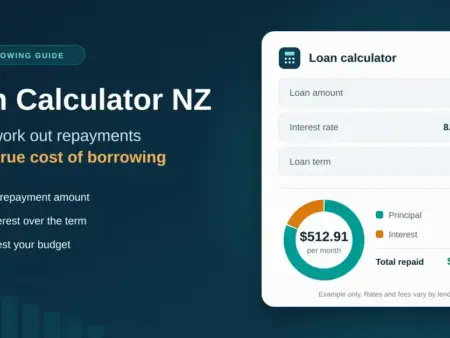
The single biggest mistake borrowers make is focusing on the weekly repayment rather than the total cost of credit. A $5,000 loan at 39.95% p.a. over three years costs far more in interest than the same loan at 19.99% — the difference can run to thousands of dollars — so always ask for the total amount repayable before you sign. Watch the full cost picture: the annual interest rate, any establishment fee (typically $100–$400), monthly admin fees ($5–$15 that add up over years), early-repayment fees and default fees.
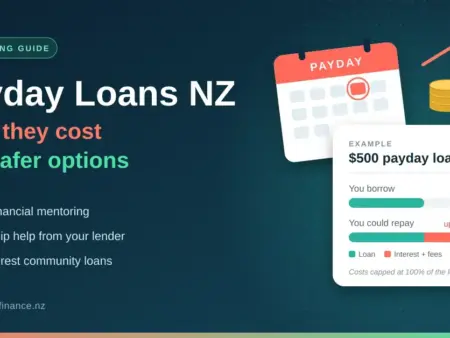
New Zealand law does cap the most expensive lending. On a high-cost loan — broadly one with an annual interest rate of 50% or more — the rate of charge is capped at 0.8% per day, and total interest and fees cannot exceed 100% of the amount first borrowed. Even within those limits, this is extremely expensive money, so treat it as a genuine last resort. To keep costs down: borrow only what you need; choose the shortest term you can genuinely afford; offer security if you have a suitable asset, which usually lowers the rate; improve your credit score first where you can, since even clearing a small default may move you to a cheaper tier; and compare several lenders, because rates and fees vary widely.
Your rights under NZ law
Every lender — including those targeting bad-credit borrowers — must comply with the Credit Contracts and Consumer Finance Act (CCCFA), which requires them to make reasonable inquiries that a loan is affordable and suitable before lending. Oversight of the CCCFA passed to the Financial Markets Authority (FMA) on 1 July 2026, taking over from the Commerce Commission, and the FMA can act against lenders who breach these obligations — see fma.govt.nz. If a lender approves you for something clearly beyond your ability to repay, you may have grounds for a complaint: raise it with the lender first, then escalate to its dispute resolution scheme (the Banking Ombudsman for banks, or a scheme such as FSCL for many non-bank lenders). You are also entitled to clear information, hardship consideration, and early repayment without penalty.
How bad credit affects you — and how to rebuild
A poor credit rating can affect more than loans: it can influence renting a property, setting up utilities, and even some jobs. On your NZ credit file, defaults stay for five years, serious credit infringements for seven, and a single bankruptcy for four years from discharge (multiple insolvencies can be held indefinitely). Credit enquiries remain for up to five years but carry minimal individual weight, while positive repayment history is reported for two years and actively helps your score.
To rebuild, get your reports from all three bureaus and dispute any errors in writing; pay every bill and repayment on time, since repayment history is the biggest scoring factor; keep any credit-card balance below about 30% of the limit; avoid multiple applications in a short period; and consider a small loan or secured card that you repay perfectly to build positive history. Keeping your KiwiSaver contributions current reflects good financial discipline too — and it captures the government contribution of up to $260.72 a year (see our KiwiSaver guide), which strengthens your overall position.
Before you apply — a quick checklist
- Check your credit report for errors and fix them first.
- Explore MSD hardship help and community finance before borrowing.
- Work out exactly how much you need — and borrow no more.
- Verify the lender is on the Financial Service Providers Register.
- Compare at least three lenders on the total cost of credit, not the weekly figure.
- Read the full contract: fees, default clauses and early-repayment terms.
- Confirm the repayments fit your budget with a buffer.
- Set up automatic payments from the day the funds arrive.
The bottom line
A bad-credit loan can be a genuine lifeline when it is used for the right purpose, at a cost you can afford, from a lender who has properly assessed your ability to repay. The key is doing your homework — checking the cheaper options first, comparing lenders, reading contracts, and never borrowing more than your budget can comfortably absorb. And if you are already struggling, speak to a free financial mentor before borrowing more. Your credit score is not permanent: with consistent, on-time repayments it will improve, and better options will follow.
Disclaimer: This article is general information about bad-credit loans in New Zealand, not financial advice, and not a recommendation of any lender or product. Interest rates, fees and rules change — confirm current details and read any contract carefully before borrowing. High-interest borrowing carries a real risk of financial harm; if money is a struggle, free, confidential help is available from MoneyTalks on 0800 345 123 (moneytalks.co.nz), and Community Law offers free legal advice.
Sources
- Financial Markets Authority — Changes to credit laws (CCCFA transfer, 1 July 2026)
- Commerce Commission — High-cost loans (0.8%/day and 100% caps)
- Consumer Protection — Credit Contracts and Consumer Finance Act
- My Credit File NZ — How long information is held on your file
- Insolvency and Trustee Service — Life after insolvency
- Inland Revenue — Getting the KiwiSaver government contribution
Frequently asked questions
Can I get a loan in NZ with bad credit?
Yes. Non-bank lenders take a more holistic view than the main banks, weighing your current income, recent bank statements and debt-to-income rather than just your credit score. Amounts typically run from about $500 to $30,000 when secured, at higher rates than standard loans — but check the cheaper options and free help first.
How much do bad-credit loans cost?
Rates are higher than standard personal loans — often around 19.99% to 49.95% p.a. — plus fees such as an establishment fee ($100–$400), monthly admin fees and default fees. Always ask for the total cost of credit in dollars over the full term, not just the annual rate.
I am on a benefit — can I get a loan?
Possibly. Some lenders accept regular, verifiable benefit income, but they will scrutinise affordability closely because benefit amounts are modest. Before applying, check Work and Income hardship assistance and no-interest community loans such as Good Shepherd NZ, which are usually far cheaper.
Do “no credit check” bad-credit loans exist?
Genuine no-credit-check loans are rare, because every lender must assess affordability under the CCCFA. A lender advertising “guaranteed approval, no questions asked” is a warning sign of a non-compliant or predatory operator — check they are on the Financial Service Providers Register first.
How long does bad credit stay on my file?
Defaults stay for five years, serious credit infringements for seven, and a single bankruptcy for four years from discharge (longer for multiple insolvencies). Positive repayment history is reported for two years and actively helps your score, which is why consistent on-time payments rebuild it over time.
No comments to show.
Best Brokers

Get approved fast with Finance Now. Personal loans, car finance & retail purchases – made easy for everyday Kiwis.

Shop now, pay later with Farmers Finance. Flexible payment options at Farmers stores across NZ – online and in-store.