Everything you need to know about KiwiSaver withdrawal in New Zealand â retirement, first home, hardship, serious illness, and more. Plain-English guidance for NZ members.

KiwiSaver Withdrawal: Your Complete NZ Guide

A KiwiSaver withdrawal is one of the bigger money decisions many New Zealanders face, yet the rules around it are widely misunderstood. People are often unsure when they can actually get their savings out, how much they are allowed to take, and what the tax and long-term consequences will be. This guide walks through every legitimate way to access your KiwiSaver under New Zealand law, what evidence you need, and what stays locked away. It is general information, not financial advice.
Key points
- KiwiSaver can be withdrawn on six grounds: turning 65, first home, significant financial hardship, serious illness or disability, permanent emigration (not to Australia), and death.
- At 65 you can take the lot, draw it down, or stay invested — and there is no general five-year wait for anyone who joined on or after 1 July 2019.
- For a first home you must have been a member for three years and leave at least $1,000 behind; Australian-sourced funds stay locked.
- Under hardship you cannot access the government contribution or the old $1,000 kick-start; everything else may be available.
- Withdrawals are not taxed when you take them, because returns are taxed yearly inside the fund at your PIR.
- Applications go through your provider, not Inland Revenue, and can take 10 working days or more.
When you can withdraw
KiwiSaver is designed as a long-term retirement savings scheme, so getting money out early is deliberately difficult. Your savings are “locked in” and can only be released on six recognised grounds set out in the KiwiSaver Act 2006:
- reaching the age of 65 (NZ Superannuation age);
- buying your first home;
- significant financial hardship;
- serious illness or permanent disability;
- permanent emigration to a country other than Australia;
- death (your balance is paid to your estate).
Each of these pathways has its own rules on how much you can take, what proof you must provide, and how long the process takes. The table below summarises them, and the sections that follow explain each one in plain language.
Withdrawal pathways compared
| Pathway | When you can apply | What you can access | Key condition |
|---|---|---|---|
| Turning 65 | From your 65th birthday | Full balance (lump sum, drawdown, or leave invested) | No general five-year wait if you joined on/after 1 July 2019 |
| First home | Once eligible, before settlement | Most of your balance, including government contributions and returns | Three years’ membership; leave $1,000; Australian-sourced funds excluded |
| Financial hardship | Any time, if the test is met | Amount needed to relieve hardship (your and employer contributions plus returns) | Government contribution and $1,000 kick-start excluded; supervisor decides |
| Serious illness / disability | Any time, if certified | Full balance | Medical certification that the legal definition is met |
| Permanent emigration (not Australia) | One year after you leave NZ | Your and employer contributions plus returns | Government contributions returned to the Crown |
| Death | After death | Full balance paid to the estate | Distributed under the will or intestacy rules |
Retirement at 65
The most common withdrawal happens at 65, the age that lines up with eligibility for NZ Superannuation. Once you turn 65 your savings are no longer locked in: you can take the whole balance as a lump sum, draw it down in regular instalments, or simply leave it invested and let it keep growing. Many providers now offer a managed drawdown or “retirement income” option so you can withdraw a set amount each month while the rest stays in the market.
There is one point worth clearing up, because the outdated rule is still repeated everywhere: there is no general five-year membership requirement to withdraw at 65. That requirement was removed for anyone who joined KiwiSaver on or after 1 July 2019. A narrow lock-in remains only for people who joined aged 60 to 64 before 1 July 2019, and even they can opt out at 65, though opting out stops any further government and employer contributions. If that might apply to you, confirm your position with your provider or Inland Revenue.
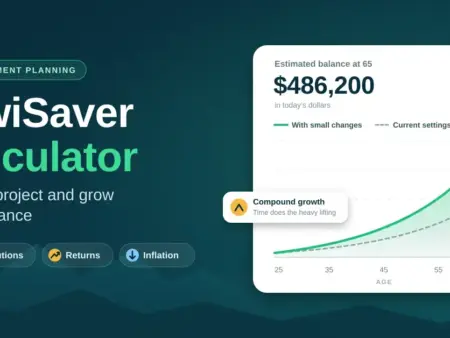
Your withdrawal is not taxed at the point you take it, because the returns inside your fund are already taxed each year under the Portfolio Investment Entity (PIE) regime. If you are still working at 65 and do not need the money, staying invested can make sense, since the account keeps compounding. You can model different scenarios with our KiwiSaver calculator, compare the performance of different KiwiSaver funds, and see how your savings sit alongside NZ Super payments.
First home withdrawal
If you are buying your first home, you can withdraw most of your KiwiSaver balance to put towards the deposit or the purchase price. There are two firm limits: you must leave at least $1,000 in your account, and any money transferred in from an Australian superannuation fund cannot be withdrawn. Everything else is available, including your own contributions, your employer’s contributions, the government contributions and the investment returns earned on all of them.
To qualify you generally need to:
- have belonged to KiwiSaver (or another complying fund) for at least three years;
- be buying your first home, or be in a position that Kāinga Ora treats as similar to a first-home buyer (for example, after a relationship breakdown);
- intend to live in the property, which must be in New Zealand;
- not have made a KiwiSaver first-home withdrawal before.
The first-home withdrawal is a separate thing from the old First Home Grant, which Kāinga Ora closed to new applications on 22 May 2024. The withdrawal itself still exists and is unaffected. Your application goes through your KiwiSaver provider rather than Inland Revenue, and your solicitor usually coordinates the payment so it lands in time for settlement. Allow at least 10 working days, and ideally longer, so a slow approval does not hold up your purchase.
Significant financial hardship
A hardship withdrawal is a last resort for members in genuine, serious financial difficulty. The bar is set high on purpose, because the money is meant for retirement, and the decision is made by your scheme’s independent supervisor rather than by Inland Revenue.
What usually qualifies: being unable to meet minimum living expenses; being unable to keep up mortgage repayments so your home is at risk of a mortgagee sale; medical costs from a serious illness affecting you or a dependant; the cost of modifying your home or vehicle for a disability; or paying for a dependant’s funeral. Wanting to clear credit-card debt, consolidate loans or renovate generally will not qualify on its own.
What you can take: only the amount needed to relieve the hardship, which can include your own contributions, your employer’s contributions and the investment returns on them. The government contribution and the old $1,000 kick-start are excluded and stay in your account. The supervisor reviews your full financial position, may approve less than you asked for, and may expect you to use other realisable assets first.
If your application is declined, you can use your provider’s internal complaints process and then its external dispute resolution scheme, ask a Community Law Centre for free help, or reapply if your circumstances get worse. For the full detail, see our dedicated KiwiSaver hardship guide, and consider free budgeting support from MoneyTalks on 0800 345 123 before you apply.
Serious illness or permanent disability
If you have a condition that is likely to shorten your life, or that leaves you permanently unable to work, you may be able to withdraw your full balance early. You will need medical certification confirming that your condition meets the legal definition, and the supervisor must be satisfied it is met. This pathway is separate from any Total and Permanent Disability (TPD) or life insurance that some funds bundle with membership, so it is worth checking what cover, if any, your membership includes before you rely on it.
Permanent emigration
If you leave New Zealand permanently for a country other than Australia, you can apply to withdraw your savings one year after you depart, providing evidence that your move is permanent, such as proof you have lived overseas for the year. You will receive your own contributions, your employer’s contributions and the investment returns, but not the government contributions, which are returned to the Crown (you do keep any returns earned on them).
Moving to Australia is treated completely differently. You cannot cash out on the basis of emigration; instead you can transfer your whole balance, including the government contributions, into an Australian complying superannuation fund under the Trans-Tasman portability arrangement. You can also choose to leave your KiwiSaver invested in New Zealand if you prefer.
Death
If a member dies, their KiwiSaver balance, including the employer and government contributions, forms part of their estate. It is paid out to the executor or administrator and distributed according to the member’s will, or under the rules of intestacy if there is no will. Having an up-to-date will and telling your family which provider you are with makes this far simpler for the people left behind.
What is in your KiwiSaver balance
Understanding what makes up your balance helps you see exactly what a withdrawal releases. Your KiwiSaver is built from four parts:
- Your own contributions — a percentage of your gross pay at a rate you choose: 3%, 4%, 6%, 8% or 10%. The default rate rose to 3.5% on 1 April 2026 and is scheduled to rise again to 4% on 1 April 2028.
- Your employer’s contributions — paid on top of your salary, matching the compulsory minimum rate (3.5% from April 2026, heading to 4% in 2028), even if you personally contribute more.
- The government contribution — now up to $260.72 a year if you contribute at least $1,042.86 yourself and earn under $180,000. This was halved from the previous $521.43 maximum on 1 July 2025.
- Investment returns — the growth (or loss) on everything above, after fees and PIE tax.
For most withdrawals you can access all four parts. The exceptions are hardship (where the government contribution and kick-start stay locked) and emigration to a country other than Australia (where the government contributions are returned). Our KiwiSaver overview explains how the scheme fits together, and our New Zealand tax rates guide covers the Prescribed Investor Rate (PIR) that applies to your returns.
The long-term cost of withdrawing early
Taking money out before retirement costs more than the sum you withdraw, because you also lose the compound growth that money would have earned over the decades ahead. Withdrawing $10,000 at age 40, for example, does not just cost $10,000 — it can cost that amount plus tens of thousands of dollars in foregone growth by the time you reach 65. That is not a reason never to use a legitimate withdrawal when you genuinely need it, but it is a strong reason to take only what you must, and to ask whether there is another option first. If the pressure is short-term debt, free budgeting help or a repayment arrangement may protect your retirement savings better than a hardship withdrawal would.
How to apply and where to get help
Every withdrawal starts with your KiwiSaver provider, not Inland Revenue — the provider (or its supervisor) assesses your application, so they are the right first call. They must explain your options and send you the correct forms. Have your IRD number, identification and any supporting evidence ready, as missing paperwork is the most common cause of delay.
For free, independent information, Sorted’s KiwiSaver guides are a good starting point. For more complex situations, such as structuring a retirement drawdown or weighing a first-home withdrawal against keeping funds invested, a licensed financial adviser can model the impact for you. You can confirm that any adviser is licensed by checking the Financial Markets Authority (FMA) register before you act on their advice.
Important disclaimer
This article is general information about KiwiSaver withdrawals. It is not financial advice, and not a recommendation to withdraw or to leave your funds invested. Rules, figures and eligibility criteria change, and each situation is assessed on its own facts, so confirm your position with your provider or Inland Revenue before acting. If money is tight, free and confidential help is available from MoneyTalks on 0800 345 123 (moneytalks.co.nz), and Sorted (sorted.org.nz) offers independent guidance on KiwiSaver.
Sources
Frequently asked questions
When can I withdraw my KiwiSaver?
On reaching 65, for a first home (after three years’ membership), in cases of significant financial hardship, serious illness or permanent disability, permanent emigration to a country other than Australia, or on death, when the balance passes to your estate. Each pathway has its own rules and evidence requirements.
Do I have to wait five years after joining to withdraw at 65?
No, not generally. The five-year membership requirement was removed for anyone who joined KiwiSaver on or after 1 July 2019. A lock-in only affects people who joined aged 60 to 64 before that date, and even they can opt out at 65, which stops any further government and employer contributions.
Can I withdraw my employer’s contributions under hardship?
Yes. A significant financial hardship withdrawal can include your own contributions, your employer’s contributions and the investment returns on them. Only the government contribution and the old $1,000 kick-start cannot be withdrawn under hardship.
Is a KiwiSaver withdrawal taxed?
No. Withdrawals are not taxed at the point you take them, because the returns inside your fund are already taxed each year at your Prescribed Investor Rate (PIR) under the PIE regime.
What happens to my KiwiSaver if I move to Australia?
You cannot cash it out, but you can transfer your whole balance, including the government contributions, to an Australian complying superannuation fund. A cash withdrawal for emigration only applies to permanent moves to countries other than Australia, and only one year after you leave.
No comments to show.
Best Brokers

Get approved fast with Finance Now. Personal loans, car finance & retail purchases – made easy for everyday Kiwis.

Shop now, pay later with Farmers Finance. Flexible payment options at Farmers stores across NZ – online and in-store.